
The Enrichment Activity Your Child Will Actually Look Forward To
Weekly tournament chess, a GM title to chase, CohenCoins to earn, and capybara companions to collect — enrichment your child will beg to attend, for ages 9–14.
Enroll Your Child on Outschool →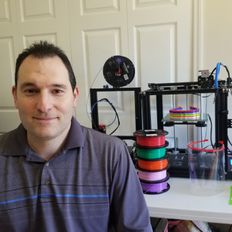
What Makes Chess a Genuine Enrichment Activity?
Enrichment activities go beyond entertainment. They build skills, challenge the mind, and leave students measurably better at something than they were before. Chess does all three — and does them in ways that are difficult to replicate with any other activity.
Unlike most recreational hobbies, chess requires students to plan multiple steps ahead, evaluate consequences they cannot see yet, manage their time under pressure, and handle the emotional weight of competition. These are not soft skills — they are the same cognitive tools that drive success in mathematics, science, and reasoning throughout a student's academic life.
A well-structured chess enrichment program does not just teach kids how to move the pieces. It teaches them how to think — deliberately, patiently, and under pressure.
The Proven Benefits of Chess for School-Age Children
Years of classroom observation and educational research point to the same conclusion: students who engage in regular, structured chess competition become sharper, more focused learners. Here is what that looks like in practice:
- Critical thinking and logical reasoning. Every chess position requires a student to evaluate multiple options, anticipate an opponent's best responses, and select the most effective path forward. This kind of structured, multi-step reasoning transfers directly to academic problem-solving.
- Sustained concentration. A tournament game with a 7-minute clock requires genuine focus for several minutes at a stretch. Students who play regularly develop the ability to block out distractions and stay fully present with a difficult task.
- Pattern recognition and visual memory. Chess is built on recurring tactical themes — forks, pins, skewers, discovered attacks — that appear across thousands of different positions. Learning to recognize these patterns quickly builds visual memory and fast, intuitive thinking.
- Emotional regulation and sportsmanship. Losing is inevitable in chess. How a student responds to a loss — whether they shake hands, analyze the game, and return better — is one of the most enduring lessons competitive chess teaches. Good sportsmanship is built one game at a time.
- Self-confidence. There is a particular kind of confidence that comes from defeating a strong opponent over the board. It is specific, earned, and transferable. Students who win hard games carry that experience into other challenges.
- Goal setting and resilience. Chess improvement is measurable. Students who track their games over time learn to set concrete goals, recognize progress, and persist through plateaus — skills that define long-term academic and professional success.
- Time management under pressure. Playing with a chess clock is an immediate, visceral lesson in prioritizing decisions efficiently. Students learn to think quickly without acting impulsively.
Why the Quality of Instruction Matters
A student's enrichment experience depends almost entirely on the quality of the instruction. Chess is no different. The game's depth means that a novice instructor — or a pure computer program — cannot give students the contextual feedback that drives real improvement.
Mr. Cohen brings three decades of competitive chess experience to every session:
- Two-time Florida Elementary Chess Champion. As a scholastic competitor in Florida in the 1990s, Mr. Cohen earned the state title twice — a distinction held by fewer than a handful of players in any generation.
- USCF rating of 1850. A strong tournament-level rating that reflects deep knowledge of openings, tactics, and endgames at every skill level relevant to school-age competitors.
- 17 years running chess clubs as a middle school teacher. Nearly two decades in the classroom watching students learn chess from scratch, fail, improve, and eventually surprise themselves. He understands precisely where students get stuck — and how to get them unstuck.
- 2,500+ Outschool students since 2020. A 4.9-star rating across 586 reviews makes Mr. Cohen one of the most experienced and most trusted online chess educators in the country.
- Bachelor's degree in History, University of Central Florida; Florida Teaching Certificate in Social Studies. An academic background built for patient, analytical instruction with school-age learners.
How the Enrichment Program Is Structured
Cohen Chess Club is not a passive lesson. It is an active, competition-based enrichment program built around deliberate practice — the most effective method for developing real skill in any domain.
- Weekly live tournaments. Every session is a live arena tournament. Students play as many 7-minute games as they can during the class — after each game, back in for a new opponent or pause for real-time feedback from Mr. Cohen over Zoom chat. The competitive format creates genuine stakes and genuine motivation to improve.
- Post-tournament instruction. After the tournament, Mr. Cohen reviews key moments from the session's games — missed tactics, strong moves, strategic ideas students can apply next time. Students learn from real positions they just played, not hypothetical textbook examples.
- Custom puzzles from each student's games. Mr. Cohen's analysis engine processes every game after the session and generates tactical puzzles from the best moments. Students can practice between sessions using tactics drawn directly from their own play.
- Continuous feedback during play. The arena format is built for feedback. After any game, a student can pause, drop a message in the Zoom chat, and Mr. Cohen will analyze the game and give them specific suggestions before their next match — so improvements happen within the same session, not a week later.
This structure mirrors the design of the most effective enrichment programs across every discipline: active engagement, immediate feedback, and progressive challenge calibrated to each student's current level.
The Platform: CohenChessClub.com
Students play on CohenChessClub.com, a custom chess platform built by Mr. Cohen specifically for his students. Unlike public chess sites, CohenChessClub.com requires no account registration — Mr. Cohen creates every account and delivers login credentials through Outschool's secure messaging system.
The platform is private, moderated, and designed from the ground up for the club's enrichment goals. No ads, no random opponents, no distracting features. Just the tournament, the puzzles, and the community of students who show up every week to improve.
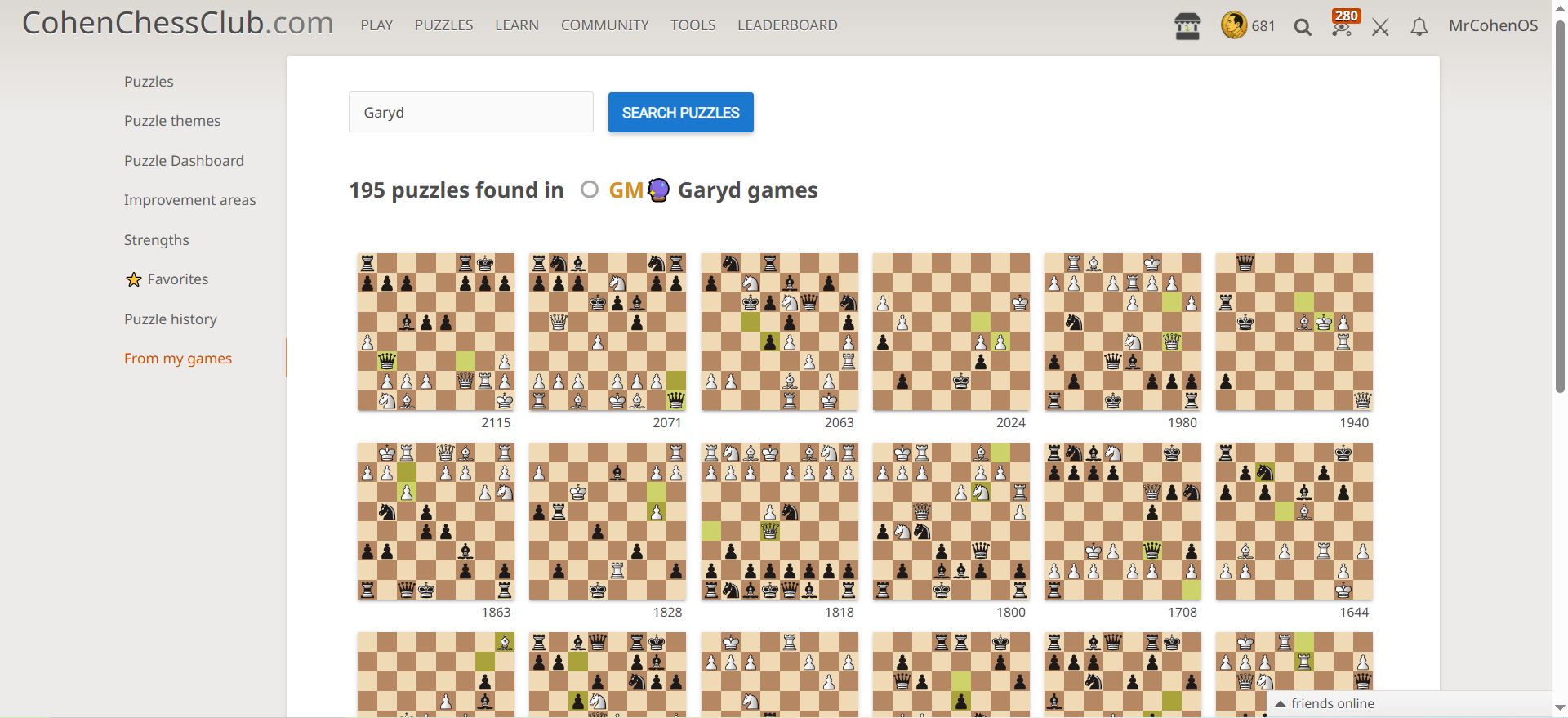
195 puzzles generated from one student's own games — every tactic is drawn from a position they actually played.
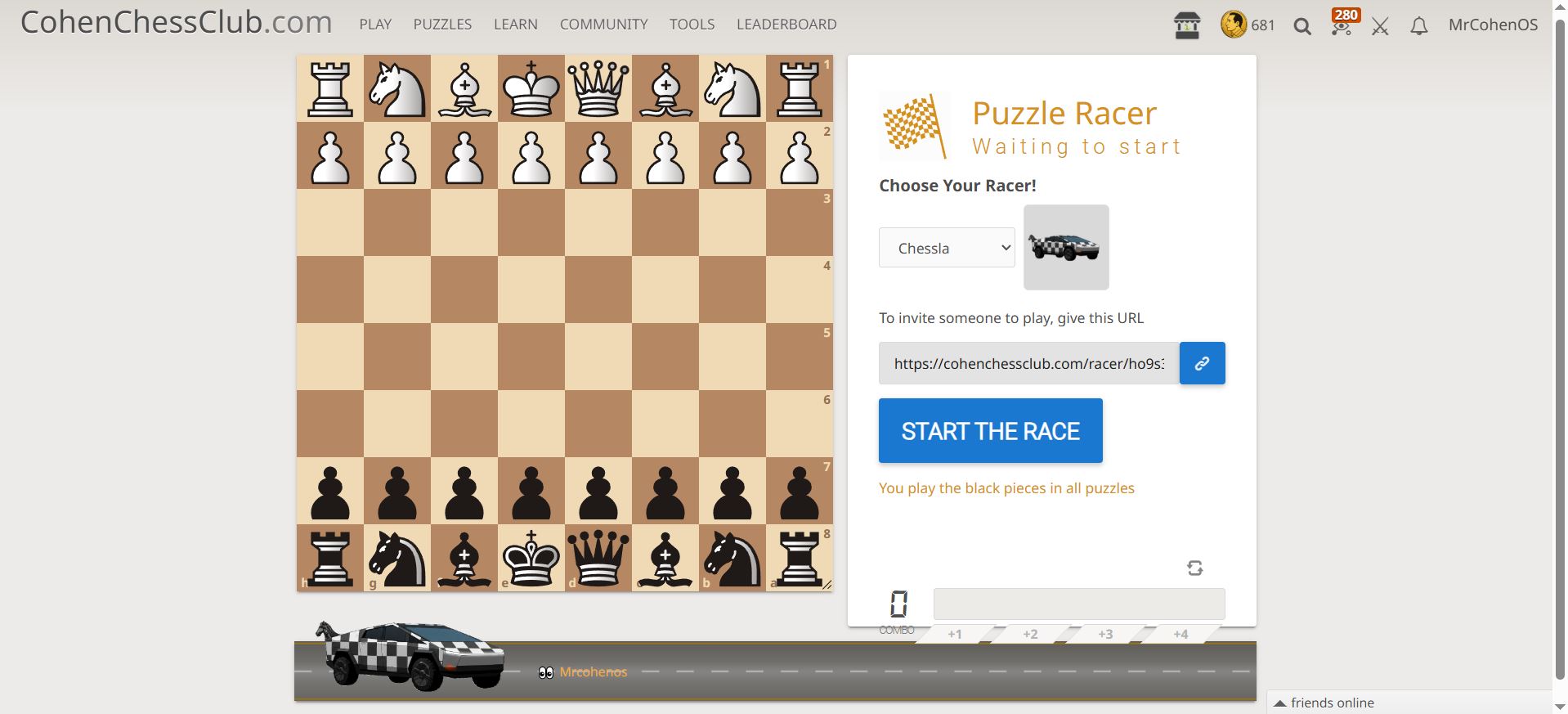
Puzzle Racer — solve tactics as fast as you can and race to the finish line. One of the features kids love most.
CohenCoins: Progress Rewarded, Not Just Wins
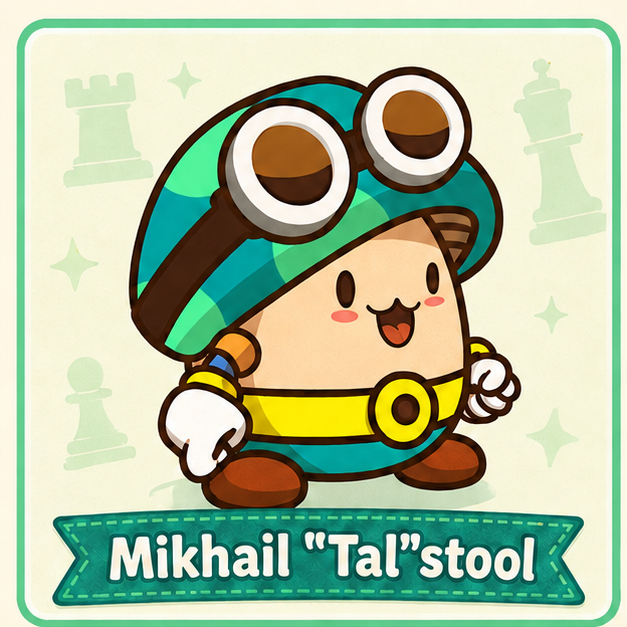
At CohenChessClub.com, every student gets recognized for the work they put in — not just how they placed in the tournament. CohenCoins are the club’s in-game currency, and they’re earned by playing and training:
- Puzzle milestones — solve 20, 50, or 100 puzzles in a week and earn bonus CohenCoins. Students who show up consistently can earn up to 7 bonus coins per week from puzzles alone.
- Tournament games — every game your child plays in the weekly tournament earns coins. Participation matters, not just the final score.
- Brilliant moves — the analysis engine watches every game and awards bonus coins when a student finds an exceptional tactic over the board.
Coins can be spent at the Monster Shop — an in-game store inside CohenChessClub.com where students unlock new capybara companions, mushroom caps, and accessories. A student who worked hard on their puzzle training all week — even if they didn’t win the tournament — walks away with something real to show for it.
What Parents Say
"Great chess club — interactive and challenging for kids. The teacher provides thoughtful, constructive feedback. My son also really enjoyed the teacher's chess platform. We will definitely be back."
"My son loves the class. He's excited to come back for another round later in the year."
4.9 stars across 586 Outschool reviews.
Frequently Asked Questions
Is this an enrichment class or a recreational activity?
Both. Cohen Chess Club is structured as a competitive enrichment program — every session has defined learning objectives, measurable outcomes, and a trained instructor providing feedback. Students also have a great time. Enrichment and enjoyment are not mutually exclusive.
What skill level does my child need?
Players of all competitive skill levels are welcome — from casual online players to experienced tournament competitors. Your child should know how all the chess pieces move and have played competitive chess before. Brand-new beginners may find the pace of a 7-minute tournament game challenging before they have built up basic pattern recognition.
Can this count toward enrichment or ESA funding programs?
Outschool is accepted by many ESA (Education Savings Account) programs, micro-grants, and scholarship programs. Check your specific program for eligibility. Sessions are $18 each with no long-term commitment.
How often should my child attend to see real improvement?
Weekly attendance produces the best results. Students who attend consistently for six to eight sessions begin to show clear improvement in tactical recognition and game quality. Many families attend multiple sessions per week to accelerate progress, especially during the summer.
Is this compatible with other chess programs?
Yes. Many students attend school chess clubs, use Chess.com or Lichess independently, and also attend Cohen Chess Club. The live tournament competition and custom puzzle work here complement any other chess learning your child is doing.
What ages is this for?
The club is designed for students ages 9–14. Groups of 4–18 students compete each session, creating a lively competitive environment while keeping the class small enough for Mr. Cohen to provide meaningful individual feedback.